Digital Transformation, Millennials, Gen X and Gen Z
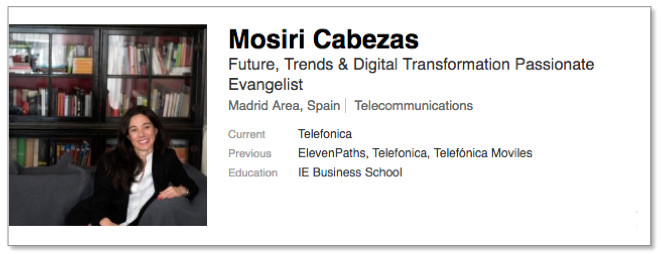
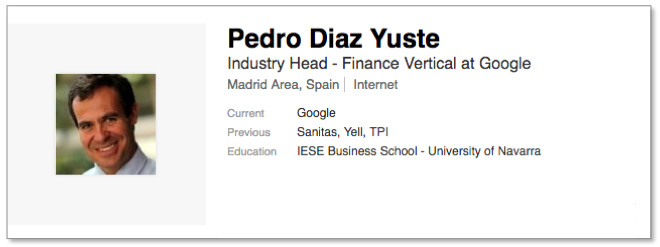
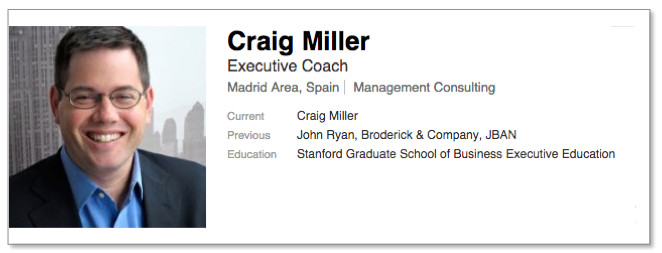
[These are my personal notes from the round table I had the good fortune to moderate in the company of Mosiri Cabezas, Pedro Díaz Yuste and Craig Miller at IE Business School as the presentation of the Executive Program in Digital Transformation - “Transforming Business Leaders”]
The idea was to create a space for discussion around the concept of Digital Transformation and how these changes can affect different generations in different ways, generations that currently find themselves in a shared space of paradigm shift.
It's possible that in the end the conversation drifted towards concepts such as team management, change management, innovation as a focus, managing failure, managing uncertainty, and personal development. And that is what the space of transformation is like. Could it be that this is a change that is more personal than organizational or generational?
Mosiri began by going over the formula for the success of Digital Transformation:
TD: ( ( Ve x Va x Ne x h ) + ( Fh x Cl x Tec ) ) x Com
A valuable reflection on "Speed" (Velocidad), "Courage" (Valentía), "Need" (Necesidad) and "Humility" (humildad) as soft values. Combined with hard factors: "people" (personas), "customers" (clientes) and "technology" (tecnología). And all of it accompanied by "Communication" (Comunicación) as the catalyst of change.
Each generation is bringing different views and different attitudes to each and every one of these factors, and it is from the combination within the team that the road to success starts.
Pedro went on with a valuable reflection on managing innovation understood as the maxim "fail fast, fail often". He stated that 70% of projects fail at Google and that only that maxim and that attitude allow a virtuous cycle of value creation through continuous innovation. This reflection on continuous innovation came out of a conversation about how much ground Spanish culture still has to cover in order to build a spirit of tolerance for error as a lever of transformation.
He shared his view on Google's rule of 80% on the current remit and 20% on personal projects and projects capable of generating a change in society. And even though that 80/20 Google Policy may not be followed strictly, it enables a valuable dynamic of change management. He also gave us the news that the Google Art Project came out of the 20% initiative of a woman working at Google in Madrid.
Craig reflected on valuable aspects related to managing personal leadership as a lever of transformation. He pointed to an important maxim about the concept of the leader's strategic vision as a catalyst of change. A leader's role is to envision the end state and to know how to steer a team in the direction they have envisioned. Without vision and without a team, transformation is not possible.
From that moment the conversation turned into a rich exchange of views between the speakers and the rest of the audience, about concepts I want to gather here as a list (it doesn't aim to be an exhaustive analysis of every contribution):
- Millennials, Gen X, Gen Z are part of a team, and from the symbiosis of the team's talent, values and attitudes the seed of transformation is planted.
- Courage and the attitude of self-improvement are indispensable levers and the germ of transformation in large organizations. And this is an aspect that is more individual than generational.
- The barriers that until now clearly separated some sectors from others have blurred. Companies' attitude should move towards understanding this fact and towards creating their own space of differentiation.
- Accepting that the rules of the game have changed is possibly one of the biggest hurdles for all those who have only known a traditional view of leadership (the challenge of the Baby Boomers as leaders).
- Organizations cannot be managed through their digital transformation process by the HIPPO rule (highest paid person's opinion). The participation of every generational view is an element of enrichment. And there will always be a leader.
- A country's culture is a differentiating factor -both negatively and positively- when it comes to building a culture of leadership. It's possible that the culture factor in our country is limiting the speed at which a new concept of leadership is built at scale.
- Leading digital transformation requires digital competencies, personal skills and experience. Digital competencies can be learned, personal skills can be polished with practice, and experience is a cumulative process that isn't acquired overnight.
Closing reflection:
Digital transformation is a fact and it is nothing more than a change. One of many, and this one has come with more intensity and is happening over a shorter period of time than other changes that took place in the past. Every generation is ready for this paradigm shift. And perhaps accepting the change is key to this period of adaptation. Shall we talk about managing uncertainty?
This transformation process is being lived through by people born natively into digital environments and by people who have felt on some occasion that digital had got the better of them. Possibly we are all ready to understand the change. Only those who have accumulated long experience -strategic vision and the ability to adapt- are chosen to lead this change. All it takes is integrating a few digital rules of the game and knowing how to join them to strategic vision. And digital competencies can always be learned. Does that, then, leave Millennials and Gen Z better prepared than Gen X? Personally, I think not. Digital keys can be learned and experience can only be accumulated.
What stays with me is the closing from Craig Miller and his quote from the philosopher Eric Hoffer; I think it sums up perfectly the spirit of transformation (personal or digital):
“In times of change, learners inherit the earth, while the learned find themselves beautifully equipped to deal with a world that no longer exists.” - Eric Hoffer
Thank you for your vision, freshness, courage, honesty and your ability to enjoy yourselves.
About me:
Bernardo Crespo is Digital Transformation Leader at Divisadero.
Director of the Executive Program in Digital Transformation at IE Business School and an Ontological Coach certified by Newfield Network in Bogotá (Colombia).
Degree in Business Administration from UCLM and final year of a BA Honours in Management and Economics, University of St Andrews. Executive Master in Relationship Marketing, CRM and E-commerce from ICEMD and a lecturer at various business schools in Spain. He worked as digital marketing director at BBVA Spain.
I currently devote myself to helping companies walk the path of Digital Transformation at DIVISADERO.
The author
Bernardo Crespo
C-suite advisor in AI, data and strategy. CEO of Quantum Markethink and Academic Director at IE. He helps leadership teams make sound decisions in the age of AI.
LinkedIn