Digital Leadership: The Vulnerable Leader
I don't know if you've ever felt the lightbulb go on while you were reading something or watching a video. I have. And this video I'm recommending has that spark.
Is it possible to lead an environment where the rules of the game have changed completely in less than 2 years? In this post I reflect on the stuff the new leaders of the digital era should be made of. It's my view, nothing very scientific. And it's worth it.
I don't know if you've ever felt the lightbulb go on while you were reading something or watching a video. I have. And this video I'm recommending has that spark. I suggest you watch it at the end. Statistics say that only 2% of you who read this post will end up watching the video. Welcome, that 2% who take it home with them.
In this environment of new ways of doing things, where an algorithm can wreck the work that 15 or 20 people used to do, we need a new kind of person, prepared to lead teams of highly talented people with limitless curiosity and passion.
To my mind, the secret no longer lies in the sort of person who had a clear vision and magnetised their team. I'm talking about the kind of leaders who have left many organisations orphaned when they left. The new leader in the digital era lets themselves be questioned, accepts mistakes as a way of evolving and creating the future, and is surprised by the team's talent and creativity. They even end up questioning their own role, surrounded by people capable of coming up with brilliant ideas at night and turning up the next day with the solution to a problem that was -apparently- unsolvable the night before.
At this stage of digital transformation, which most traditional companies have been forced into, the new leader coordinates multidisciplinary teams, with diverse and sometimes opposing talents. Profiles that in traditional organisations have at times been at odds: marketing and BI, sales and product development, technology and business. Now they are all part of the same team and each one brings their own spark of brilliance.
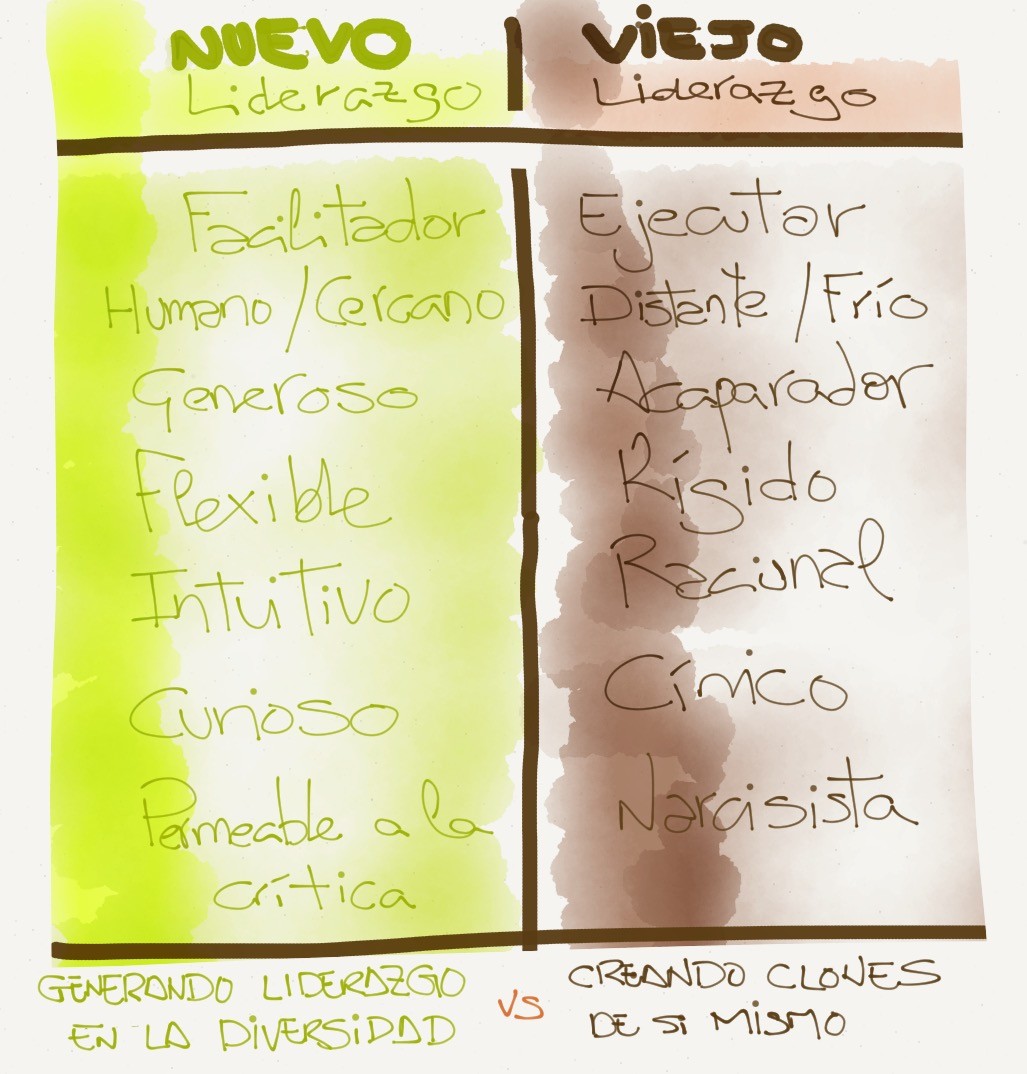
Here are some clues as to what, in my view, a digital transformation leader should have:
The new leadership enables the team's talent. In the post "In search of unicorns" I sketched out some of the capabilities of the new digital professionals. Is it possible to lead a team of hungry, passionate, curious people, unafraid of mistakes, with the ability to question, test and learn? Perhaps it isn't, if your idea of a leader is based on the old notion of the leader who, when they stop, brings the team to a standstill. The new digital leader lets talent flow and creates the space needed for the different profiles to contribute towards a vision that is changing by definition.
The new leadership is human and close. That very changing environment demands accepting mistakes as part of the script. Over the years I have learned to take the team's personal situation into account as an essential part of creating value. In my weekly status meetings I have always started with 2 minutes of personal check-in. You can't bring out the best in anyone when that person has been through a major break in their life. It's worth knowing how each of us is arriving before asking for effort. The first one who may feel crushed some day is you, and that's fine, if you have known how to respect your team's situation beforehand.
The new leadership is generous. Who hasn't found themselves at some point in their life putting together a document for their boss? And who has then never heard another word back after handing in the final version? If you decide to enable the talent of a team of brilliant people, you have just opened the door to that talent becoming visible. And some of your team will probably leave -starting with the most brilliant ones. And that may well be the biggest catalyst for value creation for the team that stays: "You grow here, even if it's elsewhere".
The new leadership is about persevering and knowing how to correct course. I remember the conversation between Alice in Wonderland and the Cheshire Cat: `Would you tell me, please, which way I ought to go from here?' `That depends a good deal on where you want to get to,' said the Cat. `I don't much care where--' said Alice. `Then it doesn't matter which way you go,' said the Cat. You can't move forward when you don't know the direction. It's possible to have a changing vision, and the purpose has to stay one and the same. I think it's necessary to persevere in reaching a desirable future situation, and it's also possible to correct course on the method, the forms or the initial planning. Now, get ready to be questioned.
The new leadership draws on intuition. Today we all accept intuition as one of the ingredients in the decision-making process. In fact, intuition is a healthy mix of experience and observation. The gals and guys I've seen handle intuition best are the ones who wouldn't be able to "de-construct" their decision-making process. Something similar happens with expert systems and their difficulty in creating an artificial intelligence that resembles the way the human brain works. It's what is known in the learning process as the "conscious competence" stage.
The new leadership drives curiosity. And given that in multidisciplinary teams it's not possible to have a deep level of knowledge in each and every one of the disciplines, all that's left is curiosity as a catalyst. Knowing how to blend intuition and daily curiosity as a catalyst for results is, I believe, the most necessary capability when leading digital teams. And curiosity and passion go hand in hand everywhere.
The new leadership leans on listening. I will never forget Rafael Echeverría's line that listening is the most active part of language. If you have been able to create the space needed for things to happen, to make it easier for talent to contribute towards reaching a desirable future situation, to accept mistakes as an essential ingredient of the creative process, to cultivate curiosity as a catalyst for change, get ready to be questioned daily. When you manage a team of extraordinary people, diversity of judgement is something that, one way or another, is always going to happen. Starting with a team questioning your decision as a block. The day that happens, smile, because you have just enabled the space you were looking for.
[Contribution to the original post by Ignacio Villoch] The new leadership communicates its vision efficiently. They get their message across by moving and inspiring their team, [they are able] to involve their team -someone is a leader because they have followers- with a call to action not based on (false) promises of (fleeting) rewards, or on (veiled) threats. Clear, simple, transparent, well-articulated, emotional, positive, inclusive communication, with no euphemisms or imperatives.
In short, unlike the old leadership -a creator of clones in its own image and likeness, the new leadership is capable of creating new leaders out of diversity.
For now, these are the skills that came to me in one sitting. Can you think of any more? I'm sure you can.
Other posts related to #LiderazgoDigital:
The author
Bernardo Crespo
C-suite advisor in AI, data and strategy. CEO of Quantum Markethink and Academic Director at IE. He helps leadership teams make sound decisions in the age of AI.
LinkedIn